
News
Office Furniture Rental in Singapore: The Complete 2026 Guide for Businesses
Mar
When businesses in Singapore need to furnish their office spaces, the traditional approach of purchasing furniture outright is no longer the only viable option. Furniture for rent Singapore has become a practical and cost-effective solution for startups, growing companies, and established businesses navigating periods of change.
The office furniture rental market in Singapore has evolved significantly since the early days when rental services primarily catered to short-term events. Today, businesses can access comprehensive furniture rental packages that include desks, chairs, storage, and meeting room furniture, all with flexible terms tailored to commercial needs.
This guide examines the practical realities of office furniture rental in Singapore, including when rental makes financial sense, what you can expect to pay, and how to navigate the rental process effectively from initial inquiry through to contract end.
When Office Furniture Rental Makes Business Sense
The decision between renting and purchasing office furniture hinges on several factors specific to your business situation. Rental typically offers clear advantages in the following scenarios.
Startups and Early-Stage Companies
Startups and early-stage companies often benefit most from furniture rental. When capital preservation is critical and headcount projections remain uncertain, committing significant funds to furniture purchases can be a strategic mistake. Rental converts a large upfront capital expense into manageable monthly operating costs.
Project-Based Teams
Project-based teams that require workspace for defined periods find rental particularly suitable. If your company has secured a six-month contract requiring 15 additional workstations, purchasing furniture for a known temporary need represents poor capital allocation. Rental provides exactly the furniture needed for exactly the period required.
Companies in Transition
Companies in transition frequently turn to rental during office relocations, renovations, or while evaluating long-term space needs. When your business is moving between locations with a gap period, or undergoing renovation that displaces employees, temporary furniture rental provides continuity without permanent acquisition.
Businesses Testing New Workspace Models
Businesses testing new workspace models use rental to experiment before committing. If you are transitioning from traditional assigned seating to activity-based working, or piloting a hybrid work arrangement, renting furniture for the pilot allows you to validate the model before purchasing permanently.
Expanding Companies Managing Cash Flow
Expanding companies managing cash flow sometimes choose rental even when they could afford to purchase. Monthly rental payments preserve working capital and maintain financial flexibility, which can be particularly valuable during rapid growth phases when capital requirements are high across multiple business functions.
Complete Cost Comparison: Rental Versus Purchase
Understanding the true cost difference between renting and purchasing office furniture requires examining both obvious and hidden expenses over time.
Upfront Capital Requirements
Purchasing office furniture demands substantial initial investment. A basic office setup for one employee in Singapore typically includes the following costs:
| Item | Purchase Cost (per unit) | Monthly Rental Rate |
| Desk | $300 to $800 | $40 to $60 |
| Office Chair | $200 to $600 | $10 to $40 |
| Filing Cabinet or Storage | $150 to $400 | $30 to $40 |
| Meeting or Folding Table | $200 to $500 | $30 to $50 |
| Total per-person estimate | $700 to $1,950 | From $80 per month |
For a 20-person office, purchasing translates to $14,000 to $39,000 before considering delivery, installation, or custom requirements. Rental for the same office might range from $1,600 to $3,000 per month.
Break-Even Analysis
The mathematical break-even point where cumulative rental costs equal purchase price typically falls between 18 and 36 months, depending on furniture type and quality levels. However, this simple calculation understates the real-world advantages of rental.
Depreciation reduces furniture value by approximately 20 to 30% in the first year, with continued decline thereafter. Maintenance and repairs over a typical five-year period add 5 to 10% of the original purchase price. Storage costs for excess furniture in Singapore average $80 to $200 per square metre monthly. These factors often shift the true break-even point considerably further out than the headline numbers suggest.
Hidden Costs in Furniture Purchasing
Several expenses are often overlooked when comparing purchase versus rental. Delivery and installation charges typically add 5 to 10% to furniture purchase costs in Singapore. Assembly requirements for flatpack or partially assembled furniture represent time and labour costs that rarely appear in purchase budgets. Disposal and restoration costs at lease end can be substantial, as many Singapore commercial leases require the office to be returned to its original condition.
Benefits of Renting vs. Buying Office Furniture
Flexibility
Renting
Allows for easy scalability, ideal for businesses with fluctuating space or staffing needs.
Buying
Requires commitment to fixed assets, limiting flexibility for future changes.
Financial Considerations
Renting
Eliminates large upfront costs, preserving capital for other business investments.
Buying
Requires significant upfront investment, impacting cash flow and budget allocation.
Quality Assurance
Renting
Provides access to high-quality furniture without the need for maintenance or repairs.
Buying
Gives ownership of furniture but may entail additional costs for maintenance and upkeep.
Customisation Options
Renting
Offers flexibility to update or change furniture as needed without long-term commitments.
Buying
Provides full control over customisation but may require additional investments for updates or replacements.
End-of-Use Disposal
Renting
Simplifies end-of-use process with easy return or renewal options.
Buying
Requires responsibility for disposal or resale of furniture when no longer needed, potentially incurring additional costs and logistical challenges.
Office Furniture Rental Singapore | lcf.com.sg
Types of Businesses That Benefit from Furniture Rental
Office furniture rental serves diverse business types, each with distinct drivers for choosing rental over purchase.
Startups and Growth-Stage Companies
Singapore’s startup ecosystem includes thousands of companies in rapid growth phases where furniture flexibility matters enormously. Pre-revenue startups particularly benefit from preserving capital. When runway calculations determine company survival, every dollar of saved capital extends the time available to achieve product-market fit.
Project-Based Organizations
Consultancies, research firms, and professional services companies frequently staff up for specific client engagements or projects. A six-month government consultancy might require 12 workstations for a duration too short to justify purchasing yet too long to be served by typical event rental arrangements.
Companies in Transition
Office relocations, mergers, acquisitions, or restructuring often create interim furniture needs. A company might need temporary workspace while its new office undergoes renovation, or require additional furniture during a post-merger integration period before rationalising space.
Training Facilities and Educational Institutions
Organisations running regular training programmes or courses need flexible furniture arrangements. Classroom configurations might change based on programme type, participant numbers, or teaching methods. Rental allows reconfiguration without the constraints of owned furniture.
Satellite Offices and Temporary Locations
Companies establishing temporary presences in Singapore, whether for market testing, project delivery, or as interim arrangements, avoid purchasing furniture for uncertain timeframes. Rental provides a fully equipped workspace without the capital or logistical burden of ownership.
Complete Rental Catalogue Breakdown
Understanding what furniture is available for rent and at what cost helps businesses plan their workspace budgets accurately. The Singapore office furniture rental market offers comprehensive options across all core categories.
Office Seating
Task Chairs and Office Chairs: Rental rates typically range from $10 to $40 monthly per chair. Basic task chairs with essential adjustment features rent for approximately $10 to $15 monthly. Mid-range ergonomic chairs with mesh backs, adjustable arms, and lumbar support typically rent for $20 to $30 monthly. Executive and high-back chairs with premium features rent for $30 to $40 monthly.
Visitor and Conference Seating: Guest chairs and conference room seating rent separately from task chairs. Expect $15 to $25 monthly for padded conference chairs. Stacking or folding chairs for training rooms rent from approximately $10 monthly.

Desks and Workstations
Individual Desks: Standard office desks in common sizes (120cm to 160cm width) typically rent for $40 to $60 monthly. Larger executive desks with additional features rent for $50 to $70 monthly.
Workstation Systems: For open-plan offices, a two-person bench-style workstation with dividing screen typically rents for $80 to $120 monthly. Modular systems accommodating L-shapes, clusters, or linear arrangements are also available with rates depending on configuration complexity.
Height-Adjustable and Sit-Stand Desks: These typically rent for $60 to $90 monthly, representing a modest premium over standard desks given the ergonomic and mechanical components involved.

Rent 3ft X 3ft Folding Table (RENTAL)
Tables
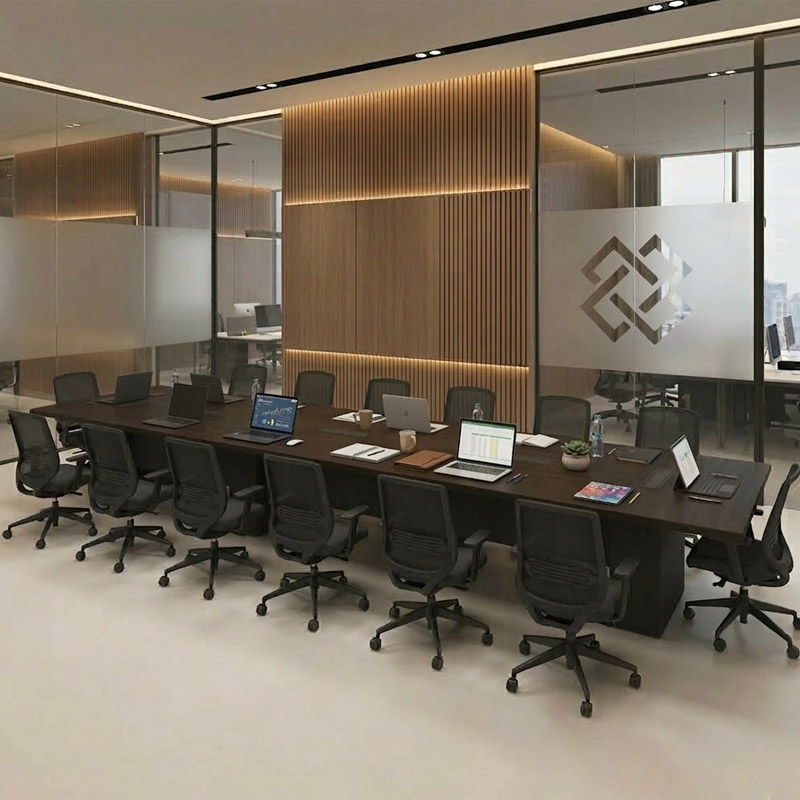
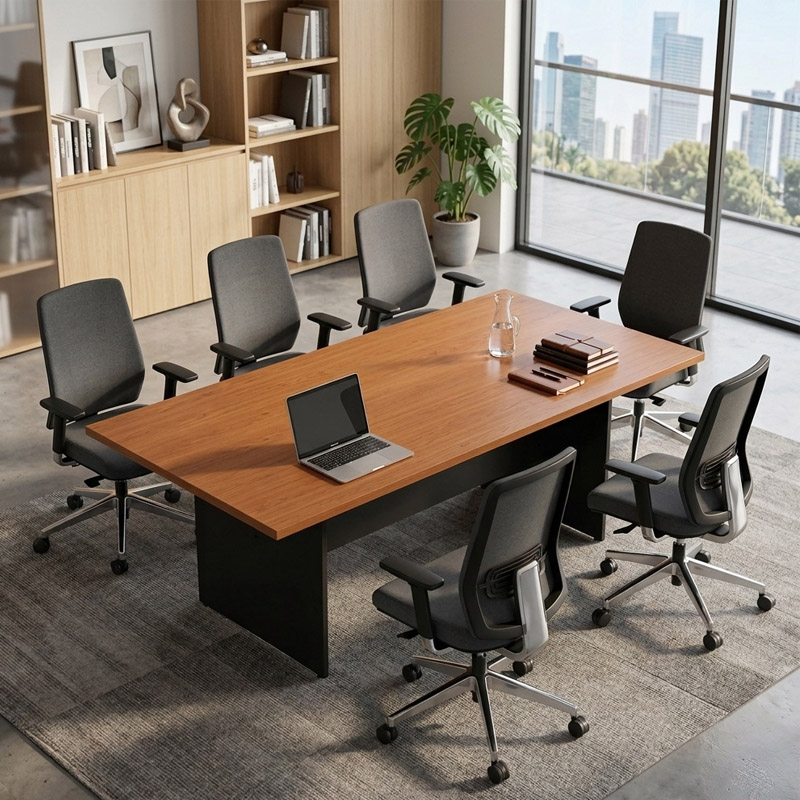
Conference and Meeting Tables: Small meeting tables (4 to 6 persons) rent for approximately $30 to $50 monthly. Medium conference tables (6 to 10 persons) typically cost $60 to $90 monthly. Large boardroom tables (10 or more persons) rent for $100 to $150 monthly.
Training and Multi-Purpose Folding Tables: Folding tables for training rooms or flexible spaces rent for $30 to $40 monthly, offering the advantage of easy reconfiguration and storage when not in use.

Rent G018 Conference Table (RENTAL)
Storage Solutions
Filing Cabinets: Two-drawer filing cabinets rent for approximately $30 monthly, while three-drawer units cost around $35 to $40 monthly. Four-drawer and larger filing cabinets rent for $40 to $50 monthly. Mobile pedestal units typically rent for $20 to $30 monthly.
Bookcases and Open Cabinets: Standard office shelving and open cabinet units typically rent for $30 to $60 monthly depending on size.
Lockers and Personal Storage: For businesses implementing clean-desk policies or hot-desking arrangements, personal lockers rent for approximately $15 to $25 monthly per unit.

Rent GD880 Filing Cabinet (RENTAL)
Quick Reference: Monthly Rental Rates in Singapore
Office Furniture Rental Process and Terms Explained
Understanding the rental process helps businesses plan their furniture acquisition timeline and budget accurately.
Initial Inquiry and Needs Assessment
The rental process typically begins with outlining your furniture requirements. Useful information to prepare includes: floor plans or office measurements, current and anticipated headcount, any specialised furniture needs such as height-adjustable desks or ergonomic seating, and your required rental duration. Many providers offer space planning services to help optimise layout based on this information.
Quotation and Pricing
Quotations from rental providers outline per-item monthly costs, minimum rental periods (typically three months to one year for commercial furniture), delivery and installation charges, and deposit requirements. Security deposits usually equal one to three months of rental fees and are refundable at contract end subject to furniture condition assessment.
Rental Agreement Key Terms
Standard rental agreements cover payment terms (typically monthly in advance), the rental period and renewal options, maintenance and repair responsibilities, furniture condition expectations upon return, early termination terms, and in some cases insurance requirements. Understanding each clause before signing prevents disputes later.
Contract End and Furniture Return
Most agreements require 30 to 90 days notice before contract end. Following furniture collection, the provider inspects condition, processes any applicable charges for damage beyond normal wear, and refunds deposits within 14 to 30 days. Confirm your lease restoration requirements, as some Singapore commercial leases require patching or minor repairs after furniture removal.
Delivery, Setup, and Maintenance
Delivery Logistics in Singapore
Singapore’s commercial buildings vary widely in delivery access. High-rise offices may have specific loading dock hours, lift reservation requirements, or maximum delivery sizes. Confirm furniture dimensions against your building’s access points before finalising the rental. Standard delivery occurs during business hours on weekdays, with evening or weekend delivery typically available at a premium of 20 to 50%.
Standard delivery timeframes for in-stock furniture typically range from 5 to 10 working days from contract execution and deposit payment. Urgent deliveries can sometimes be arranged in 2 to 3 working days at additional cost.
Installation and Setup
Delivery typically includes furniture assembly and basic installation. Confirm whether this covers desk assembly, chair setup, and placement in designated locations, or merely delivery to the premises. Modular workstation systems require more extensive assembly, so ensure adequate time is allocated. Basic cable management is typically included with desk installation.
Ongoing Maintenance
Day-to-day cleaning and basic upkeep remain the business’s responsibility. When furniture malfunctions due to normal use, the rental provider typically handles repairs or replacement. Response times vary by provider but should be specified in your agreement. For longer rental periods of two or more years, discuss planned furniture refreshment with your provider to maintain a professional office appearance.
Short-Term Versus Long-Term Rental Strategies
Short-Term
Under 12 months
Higher monthly rates. Maximum flexibility. Ideal for project-based teams, relocations, or trials. Rates typically $10 to $20 more per item per month compared to long-term.
Medium-Term
1 to 3 years
Balanced cost and flexibility. Most competitive for growing businesses. Allows for adding or removing items as the team changes. Negotiate break clauses for protection.
Long-Term
3 or more years
Best monthly rates, sometimes 60 to 70% of short-term pricing. Negotiate furniture refresh clauses. Best for stable businesses in long-term leases.
At three or more years, cumulative rental costs approach and may eventually exceed purchase prices for most furniture. If you are confident in your space requirements for this duration, carefully evaluate whether a hybrid approach (purchasing core items while renting supplementary pieces) offers better economics.
Case Studies: Furniture Rental in Action
Case Study: Technology Startup Scaling Rapidly
Challenge: A software startup with 8 employees needed to scale to 30 by year-end following a Series A round, but faced uncertainty about exact hiring pace and timing. Purchasing for 30 upfront risked capital waste if growth was slower than projected.
Solution: A 12-month rental agreement for 15 initial workstations with terms permitting incremental additions. As each new hire joined, additional desks and chairs were delivered within 5 to 7 days. By December the office had scaled to 28 workstations through seven separate additions.
Outcome: Furniture costs aligned directly with headcount growth. Capital that would have been tied up in furniture purchases remained available for product development and hiring. When one hire departed after three months, the company simply reduced the rental by one workstation.
Case Study: Consultancy Firm Managing a Project Team
Challenge: A management consultancy won a 9-month government project requiring a dedicated team of 12 consultants at a client site. Purchasing furniture for this specific project made no economic sense, and the consultancy’s existing office had no spare furniture available.
Solution: A 9-month rental agreement providing 12 complete workstations, a meeting table for 8 people, and all necessary storage furniture. Delivery and installation occurred during the weekend before the project start date.
Outcome: Total furniture costs were directly allocated to the project budget and passed to the client as a project expense. When the project concluded, all furniture was collected within two days, leaving the space ready for return to the landlord.
Case Study: Established Company Managing Office Renovation
Challenge: A 15-year-old trading company relocating to a newer building faced a 3-month renovation period. The company wanted to purchase furniture for the permanent new office but needed temporary workspace for 35 employees in the interim.
Solution: A short-term rental agreement providing basic desks, chairs, and essential meeting room furniture in temporary premises for the 3-month period, while permanent furniture was ordered and delivered to align with renovation completion.
Outcome: Business operations continued uninterrupted. Temporary rental costs totalled approximately $10,500 for the 3 months. Purchasing equivalent furniture would have cost $25,000 to $30,000 and would have been redundant once permanent furniture arrived.
Case Study: Company Testing Workplace Innovation
Challenge: A financial services firm wanted to pilot activity-based working for one department of 22 people before potentially rolling it out firm-wide. Purchasing furniture for an experimental arrangement risked significant write-offs if the model did not work.
Solution: A 6-month rental agreement providing a mix of hot-desks, collaborative tables, quiet focus areas, and personal lockers, with terms allowing configuration adjustments during the trial period.
Outcome: The pilot ran for 6 months with two configuration adjustments based on actual usage patterns. With clear data from the trial, the company expanded the model to three more departments, this time purchasing furniture based on the proven configuration. The rental period served as effective paid market research.
Hidden Costs to Watch For
Several expenses can surprise businesses new to furniture rental if not anticipated in advance.
Transportation and Delivery Charges
Standard delivery fees sometimes conceal additional components: location surcharges for deliveries outside central Singapore, floor level charges for high-rise buildings with restricted lift access, after-hours delivery premiums of 20 to 50%, and separate charges for each incremental furniture addition during the rental period. Batch additions when possible to minimise multiple delivery fees.
Damage and Fair Wear Disputes
Rental agreements distinguish between normal wear and damage, but these definitions can be subjective. Understand your provider’s damage assessment process, whether charges are based on repair costs, replacement value, or depreciated value. Photograph furniture condition upon delivery and again before return to establish clear evidence if disputes arise.
Early Termination Penalties
Ending a rental before the minimum period may incur penalties, often calculated as a percentage of remaining rental payments. Even if the minimum period has elapsed, most agreements require 30 to 90 days notice before termination. Missing this notice period may obligate you to additional rental payments.
Administrative Fees
Late payment charges, contract amendment fees for modifications such as adding items or changing billing details, and deposit refund delays of 30 days or more can affect cash flow if not budgeted for in advance.
Frequently Asked Questions About Office Furniture Rental
How quickly can office furniture be delivered and installed in Singapore?
Standard delivery for in-stock furniture typically ranges from 5 to 10 working days from contract execution and deposit payment. Urgent deliveries can sometimes be arranged in 2 to 3 working days at additional cost. Custom or made-to-order furniture requires 4 to 8 weeks depending on specifications.
What is the minimum rental period for office furniture?
Most commercial office furniture rental in Singapore requires minimum commitments of 3 to 12 months. The specific minimum depends on furniture type, total order value, and provider policies. Event furniture and very short-term needs (days or weeks) fall under different rate structures with daily or weekly pricing.
Can you rent just one or two furniture items?
Most providers accept small rentals, though minimum order requirements vary. Small orders may not qualify for the most competitive rates and might have proportionally higher delivery charges. Confirm minimum order requirements when requesting a quotation.
What happens if rented furniture is damaged during use?
Normal wear from regular use does not incur charges. Damage beyond reasonable wear may result in repair or replacement charges, typically assessed at contract end. Many providers offer damage waiver insurance for an additional monthly fee of approximately 5 to 10% of rental cost, which covers most damage scenarios.
Is maintenance included in office furniture rental agreements?
Standard rental agreements typically include maintenance for mechanical failures and defects arising from normal use. Day-to-day cleaning and basic upkeep remain the renter’s responsibility. Damage caused by misuse or abuse may not be covered under standard maintenance provisions.
How does furniture rental affect company accounting and taxes?
Rental payments are generally treated as operating expenses, deductible in the period incurred. This contrasts with purchased furniture, which is capitalised and depreciated over time. Rental can improve certain financial metrics by keeping furniture off the balance sheet. Consult your accountant regarding specific tax treatment applicable to your business structure.
What happens at the end of the rental agreement?
At contract end, options typically include renewing the agreement (monthly rolling or new fixed term), returning all furniture, or in some cases purchasing the rented furniture at depreciated value. Collection is scheduled, furniture condition is assessed, and deposits are refunded within 14 to 30 days subject to any damage charges.
Office Furniture Rental Inquiry Checklist
Use this checklist when evaluating office furniture rental options to ensure you gather all necessary information and make informed decisions.
Your Requirements
- Total number of workstations needed
- Breakdown of furniture types required
- Specialised furniture needs
- Expected rental duration
- Delivery date requirements
- Budget range per month
Questions for Providers
- Minimum rental period for needed items
- Monthly rates for each furniture type
- Volume discounts for larger orders
- Deposit amount and refund process
- Delivery timeframes and charges
- Early termination terms
Due Diligence
- Review sample agreement before committing
- Verify provider credentials
- Check customer reviews
- Compare at least two provider quotes
- Confirm furniture is available in stock
Contract Finalisation
- Written agreement matches all discussed terms
- Furniture specs match quotation
- Delivery date and scope confirmed in writing
- Customisation commitments documented
- Contact person for ongoing service identified
Making the Right Choice for Your Business
Office furniture rental in Singapore offers flexibility, cost management, and operational advantages for many business situations. Whether you are a startup preserving capital, an established company managing a transition, or a project-based organisation with defined timelines, furniture for rent in Singapore provides a practical alternative to outright purchase.
The economics of rental versus purchase depend heavily on your specific circumstances. While long-term ownership eventually becomes more economical in pure cost terms, rental’s value extends beyond simple break-even arithmetic. Flexibility, capital preservation, maintenance inclusion, and exit simplicity all factor into the true comparison.
Successful furniture rental begins with clearly understanding your requirements, timeline, and budget. Take time to compare providers, understand contract terms thoroughly, and plan for hidden costs that might not be immediately obvious. With careful evaluation and clear requirements, office furniture rental in Singapore can provide exactly the workspace your business needs, for exactly as long as you need it.
Ready to Explore Office Furniture Rental Options?
Contact established providers with proven track records in commercial office furniture. Discuss your specific requirements, request detailed quotations, and ask to see the furniture in person before committing to an agreement.