
News
Temporary Office Setup: Complete Furniture Rental Checklist
Setting up a temporary office in Singapore presents unique challenges that differ significantly from establishing a permanent workspace. Whether you are managing a three-month project, bridging the gap between office relocations, or testing a new market before committing to long-term premises, temporary office setups require careful planning to create functional workspace quickly without unnecessary expense on furniture you will only use briefly.
This comprehensive checklist guides you through furnishing a temporary office using rental furniture, helping you establish professional, productive workspace efficiently while avoiding the costly mistakes that often plague rushed temporary setups.
When Temporary Office Setups Are Required
Understanding your specific temporary office scenario helps determine the right approach to furnishing and planning.
Project-Based Teams
Consultancies, contractors, and project-focused businesses frequently need workspace for defined periods matching contract duration. A six-month government project requiring 12 workstations demands functional office space for exactly that timeframe, neither longer nor shorter.
Office Transition Periods
Companies relocating between permanent offices often face gaps when new premises require renovation before occupation or when lease end dates do not align with new space availability. During these transition periods, temporary workspace keeps operations running without disruption.
Market Testing and Pilot Operations
Businesses evaluating Singapore market entry or testing new service offerings may establish temporary offices to operate pilot programmes before committing to permanent presence. This allows real-world operational experience without long-term financial commitments.
Temporary Expansion
Companies experiencing short-term capacity needs, such as seasonal peaks or specific project surges, sometimes require additional temporary workspace beyond their main office to accommodate extra staff without permanent expansion.
Interim Solutions During Renovation
Office renovations often necessitate temporary relocation of all or part of a team while work proceeds. Rather than attempting to operate in construction environments, temporary alternative workspace maintains productivity and employee wellbeing.
Planning Your Temporary Office Setup
Before ordering furniture or equipment, strategic planning prevents common temporary office mistakes.
Determine Exact Duration
Know precisely how long you need the temporary office. Three months requires different planning than twelve months, affecting furniture rental terms, equipment decisions, and setup investments.
Many temporary office failures stem from underestimating duration. A project planned for three months extending to seven creates chaos when temporary arrangements assumed shorter timeframes. Build buffer into your duration estimates.
Assess Team Size and Growth
Calculate current headcount requiring workspace and project any additions during the temporary period. Starting with 8 people but expecting to reach 15 by month three requires planning for that growth from the beginning rather than scrambling to add workstations mid-project.
Define Space Requirements
Temporary offices still need appropriate space for various functions beyond basic workstations.
Workstations: Allow 5 to 7 square metres per person for adequate individual workspace in Singapore’s compact commercial environment.
Meeting Space: Allocate at least one meeting area for every 10 to 12 employees, even in temporary setups, to prevent productivity-killing workspace conflicts.
Storage: Consider filing needs, equipment storage, and personal item storage when calculating space requirements.
Common Areas: Small pantry or break areas maintain employee morale even in temporary arrangements.
Establish Budget Parameters
Temporary office budgets typically work backwards from total project cost or available capital. If you have $12,000 allocated for a four-month temporary office, that translates to approximately $3,000 monthly for furniture, equipment, and services.
Rental furniture simplifies budgeting by converting upfront capital expenses into predictable monthly costs. Rather than spending $8,000 on furniture you will dispose of after four months, rent what you need for the exact period required.
Essential Furniture Rental Items
This section outlines core furniture requirements for temporary offices with approximate rental costs based on Singapore office furniture rental rates.
Workstation Furniture
Desks
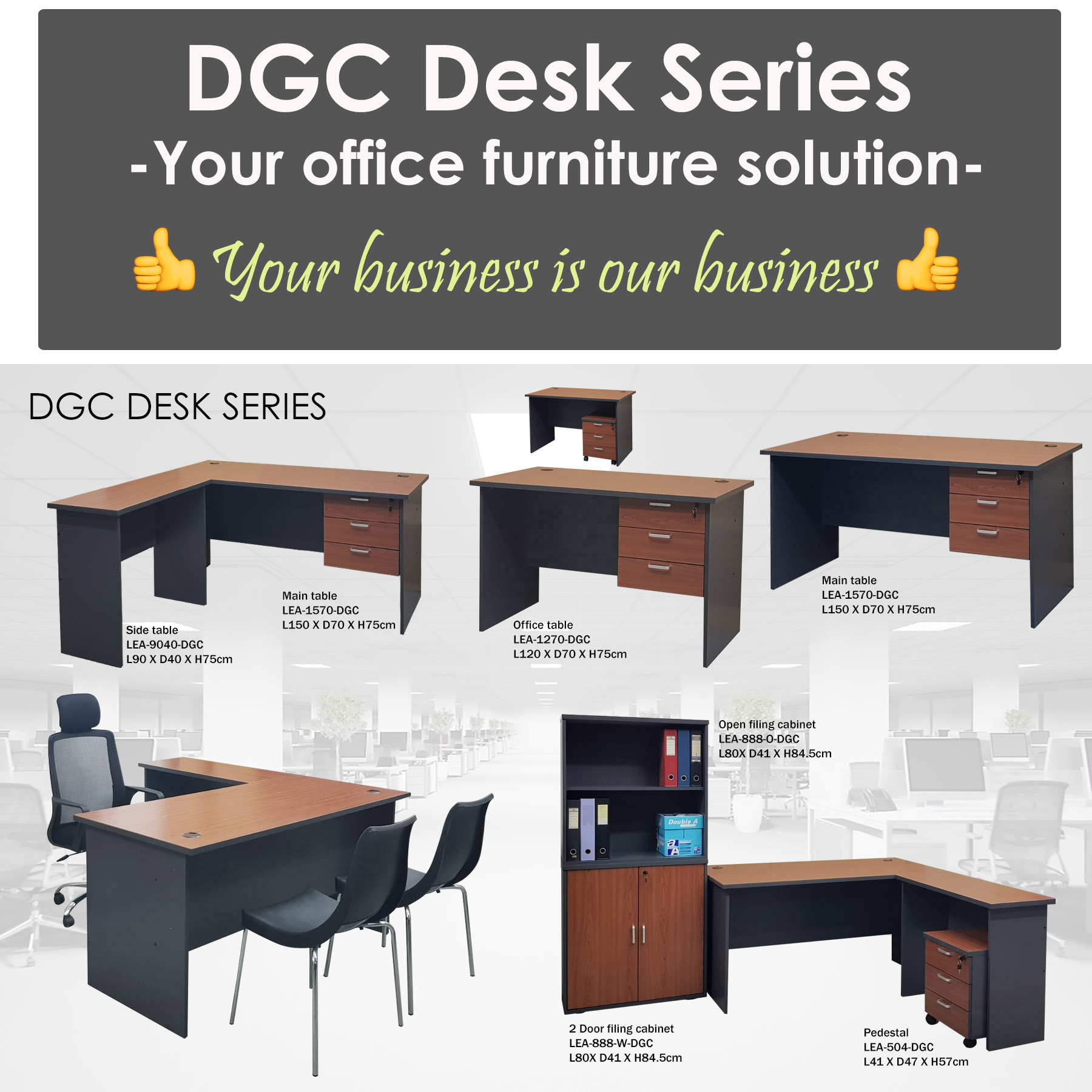
Every employee needs appropriate desk space. For temporary setups, standard rectangular desks in 120cm to 140cm widths provide adequate workspace without unnecessary expense on premium sizes.
Standard office desks rent for approximately $40 to $50 monthly per unit. For a 10-person temporary office, budget $400 to $500 monthly for desks.
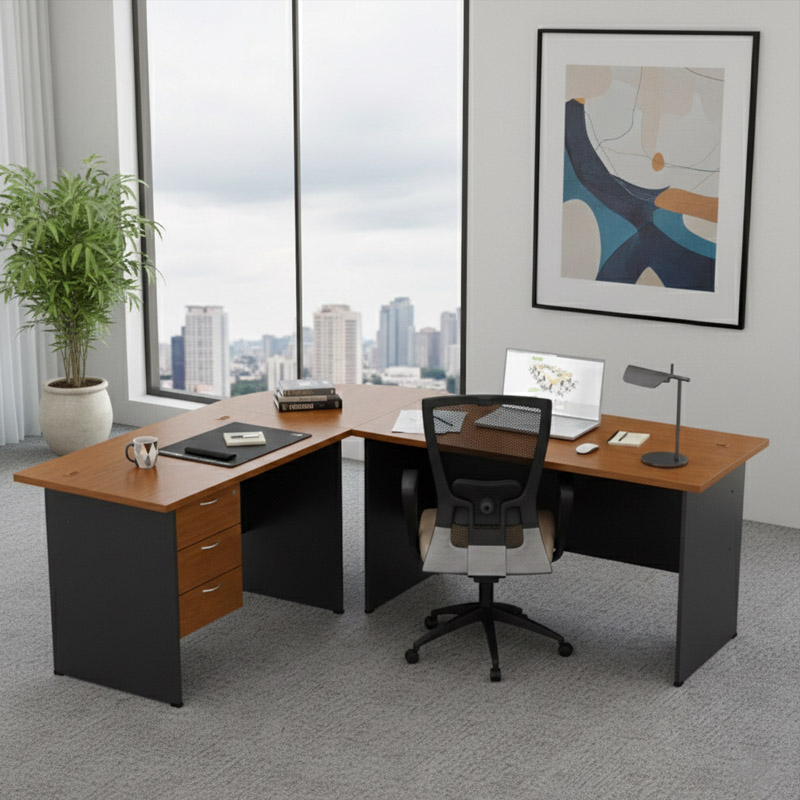
L-shaped desks offering additional workspace and corner utilization rent for $50 to $60 monthly but may prove impractical in temporary arrangements where space efficiency matters more than generous individual workspace.
Office Chairs
Comfortable, adjustable seating remains essential even in temporary offices. Employees spending eight hours daily in chairs require adequate ergonomic support regardless of office duration.
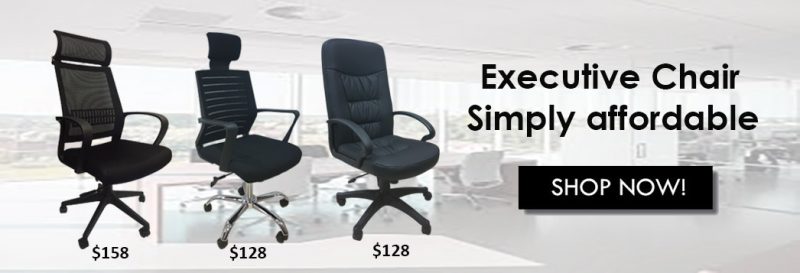
Basic task chairs with essential adjustment features (seat height, tilt) rent for $10 to $15 monthly. Mid-range ergonomic chairs with mesh backs, adjustable arms, and lumbar support rent for $20 to $30 monthly.
For temporary offices lasting three to six months, mid-range chairs represent wise investment. The modest cost difference ($10 to $15 monthly per chair) prevents employee discomfort and productivity loss that cheap seating causes.
A 10-person temporary office should budget $200 to $300 monthly for appropriate office chairs.
Storage Solutions
Even temporary offices require document storage, personal item security, and equipment organization.
Two-drawer filing cabinets rent for approximately $30 monthly, while three-drawer units cost around $35 to $40 monthly. Mobile pedestal units that fit under desks for personal storage rent for $20 to $30 monthly.
Budget $30 to $40 per person monthly for adequate storage in temporary setups.
Meeting and Collaborative Space
Meeting Tables
Temporary offices need meeting space for team coordination, client interactions, and collaborative work.
Small meeting tables accommodating 4 to 6 people rent for $30 to $50 monthly. If your temporary office requires formal client meetings, this investment maintains professional appearance.
For informal internal meetings, folding tables renting at $30 to $40 monthly provide flexibility and easy reconfiguration.
Meeting Room Seating
Budget $15 to $25 monthly per chair for meeting room seating. A 6-person meeting setup requires 6 chairs at approximately $90 to $150 monthly total.
Collaborative Furniture
Small collaborative tables for break-out discussions or informal meetings rent for $20 to $35 monthly. These prove particularly valuable in temporary project offices where frequent team coordination occurs.
Reception and Visitor Areas
If your temporary office receives clients, suppliers, or other visitors, minimal reception area furniture maintains professional image.
A small reception desk or counter establishes clear entry point and visitor management. Reception seating (2 to 4 guest chairs) provides comfortable waiting area. Budget $100 to $200 monthly for basic reception area furniture rental.
Complete Temporary Office Furniture Checklist
Use this comprehensive checklist when planning your temporary office furniture rental.
Workstation Essentials (Per Person)
- Desk (120cm to 140cm width)
- Ergonomic office chair with adjustments
- Filing cabinet or mobile pedestal for storage
- Desk accessories (monitor stand, cable management)
Meeting and Collaboration
- Meeting table (size based on team size)
- Meeting room chairs (quantity matching table capacity)
- Whiteboard or presentation board
- [Small collaborative tables for informal discussions
Common Areas
- Pantry table or counter space
- Seating for break area
- Storage for pantry supplies
Reception (If Applicable)
- Reception desk or counter
- Guest seating (2 to 4 chairs)
- Side table for reading materials
Additional Items
- Coat stands or hooks
- Waste bins and recycling containers
- Equipment stands or shelving if needed
Technology and Communications for Temporary Offices
While this guide focuses primarily on furniture, temporary offices require coordination between furniture layout and technology infrastructure.
Internet Connectivity
Arrange internet installation immediately upon securing temporary premises. Even short-term rentals require 2 to 4 weeks for installation in Singapore, so coordinate this early in your planning.
For temporary offices under six months, mobile broadband or temporary business internet packages often prove more practical than standard commercial installations requiring 12 to 24-month contracts.
Communication Systems
Temporary offices lasting under three months may function adequately with mobile phones rather than installing desk phone systems. For longer temporary arrangements (6+ months), basic VoIP phone systems provide professional communication without traditional landline installation complexity.
Equipment Placement
Plan furniture layout considering equipment needs. Printers, scanners, and shared equipment require accessible locations with power and network access. Position workstations near power outlets to minimize extension cord requirements.
Timeline for Temporary Office Setup
This timeline assumes you have already secured temporary office space and addresses furniture and equipment installation.
4 to 6 Weeks Before Move-In
- Finalize temporary office space lease or agreement
- Measure space and create layout plan
- Identify furniture requirements using this checklist
- Request quotes from furniture rental providers
- Arrange internet and communication service installation
3 to 4 Weeks Before Move-In
- Confirm furniture rental agreement and delivery dates
- Verify internet installation schedule
- Order necessary office supplies and equipment
- Communicate move details to affected employees
- Plan furniture layout and workstation assignments
2 Weeks Before Move-In
- Confirm all delivery and installation appointments
- Conduct site visit to verify space readiness
- Prepare employee orientation materials for temporary office
- Arrange equipment transport from current location if applicable
1 Week Before Move-In
- Verify furniture delivery confirmation
- Test internet and communication systems
- Stock pantry and supplies
- Conduct final walkthrough
- Address any last-minute issues or adjustments
Move-In Week
- Oversee furniture delivery and installation
- Setup workstations with equipment
- Test all systems (internet, power, equipment)
- Conduct employee orientation to temporary space
- Make minor adjustments as needed
Common Temporary Office Setup Mistakes to Avoid
Learning from common errors saves money, time, and frustration.
Underestimating Storage Needs
Temporary does not mean paperless. Even short-term offices accumulate documents, supplies, and personal items requiring storage. Inadequate storage creates cluttered, dysfunctional workspace.
Budget adequate filing cabinets and storage solutions from the beginning rather than scrambling to add them after move-in when chaos is already established.
Choosing Cheapest Furniture Without Comfort Consideration
The lowest-cost chairs and desks often prove penny-wise and pound-foolish. Uncomfortable furniture reduces productivity, creates employee dissatisfaction, and may cause health issues even in temporary arrangements.
The cost difference between basic and mid-range ergonomic furniture is modest ($10 to $15 monthly per workstation), while the productivity impact of uncomfortable workspace is substantial.
Failing to Plan for Growth
Many temporary offices experience headcount changes. Planning only for current team size without flexibility for additions creates problems when project needs change.
Leave space for 2 to 3 additional workstations in your layout, or plan where furniture additions can be positioned if needed.
Neglecting Meeting Space
Temporary offices without adequate meeting areas force teams into makeshift arrangements that disrupt productive work. Even basic temporary setups benefit from at least one proper meeting area.
Poor Communication About Duration
Furniture rental providers need accurate duration estimates. Providing three-month estimates for what becomes seven-month needs often results in complications, pricing adjustments, or service difficulties.
Be realistic about likely duration and communicate any extensions promptly rather than dealing with furniture collection notices when you still need workspace.
Inadequate Lead Time
Rushing temporary office setup invariably creates problems. Furniture delivery requires 5 to 10 working days minimum. Internet installation takes 2 to 4 weeks. Attempting to furnish workspace in three days leads to compromises and operational disruptions.
Allow minimum 3 to 4 weeks for proper temporary office setup, ideally 6 weeks for complex arrangements.
Cost Example: 12-Person Temporary Office for 6 Months
This example illustrates realistic costs for a medium-sized temporary office in Singapore using furniture rental.
Workstations (12 people):
- Desks: 12 x $45 = $540 monthly
- Office chairs: 12 x $25 = $300 monthly
- Storage (pedestal units): 12 x $25 = $300 monthly
- Subtotal: $1,140 monthly
Meeting Space:
- Meeting table (8-person): $60 monthly
- Meeting chairs: 8 x $20 = $160 monthly
- Subtotal: $220 monthly
Common Area:
- Pantry table: $40 monthly
- Seating: 4 x $20 = $80 monthly
- Subtotal: $120 monthly
Reception Area:
- Small reception setup: $150 monthly
- Subtotal: $150 monthly
Monthly Furniture Rental Total: $1,630
Six-Month Total: $9,780
Additional One-Time Costs:
- Delivery and installation: $600
- Internet installation and equipment: $300
- Basic office supplies: $400
- Miscellaneous items: $200
- One-time total: $1,500
Complete Six-Month Temporary Office Cost: $11,280
This represents comprehensive, comfortable workspace for 12 people for six months. Compare this to purchasing equivalent furniture ($14,000 to $22,000) that you would need to dispose of when the temporary period ends.
Making Your Temporary Office Work
Temporary office setups need not feel temporary in terms of functionality and professionalism. With proper planning using this checklist, you can establish productive workspace quickly that serves your team effectively for whatever duration required.
The key advantages of furniture rental for temporary offices are clear: predictable monthly costs, no disposal complications, flexibility to adjust as needs change, and professional-quality furniture without capital investment in assets you will only use briefly.
Start planning early, use this checklist to ensure you address all essential items, communicate duration accurately to your rental provider, and do not compromise on employee comfort even in temporary arrangements. Well-executed temporary office setups maintain productivity and morale while serving their defined purpose efficiently.
For businesses in Singapore facing temporary office needs ranging from three months to two years, furniture rental provides the practical solution that aligns costs directly with usage period while maintaining the professional workspace quality your team requires.